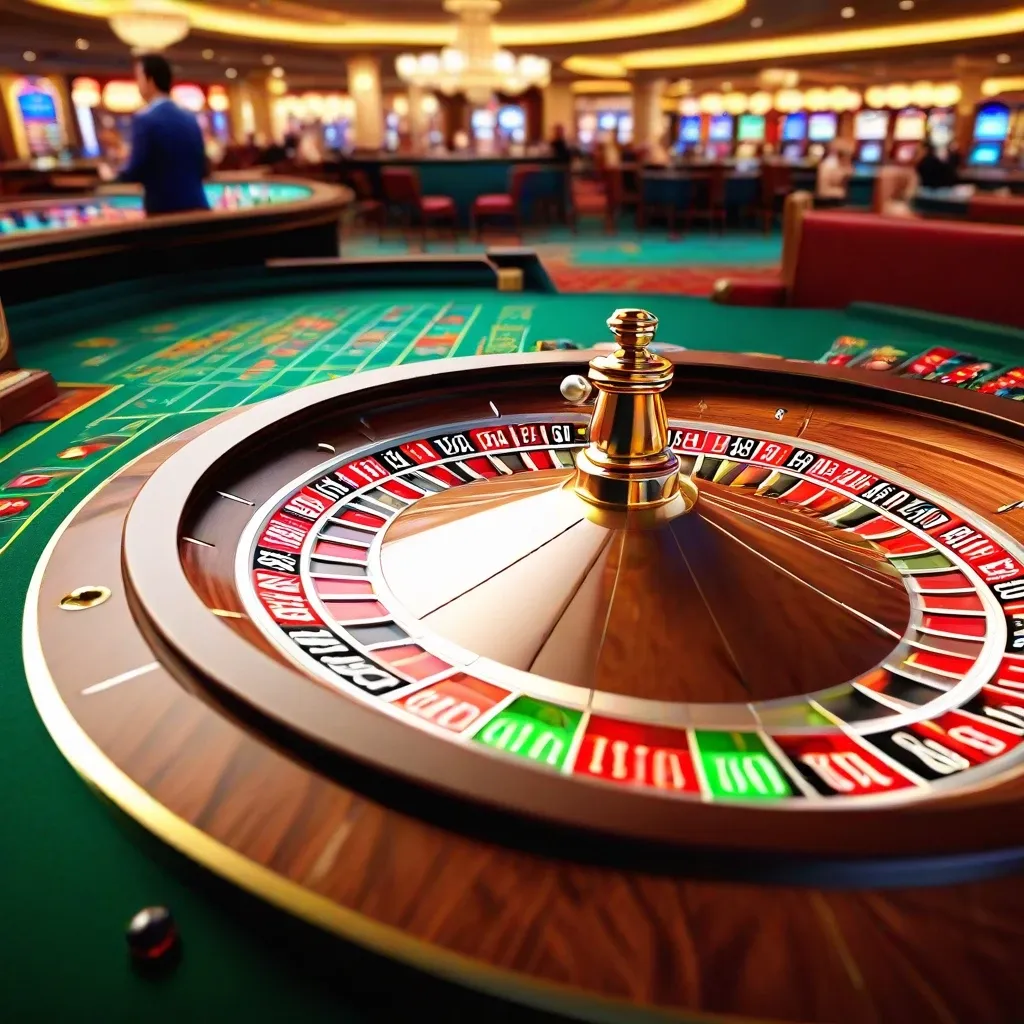
The flashing lights, the spinning reels, the clatter of chips – stepping into a casino, whether a brick-and-mortar establishment or its digital equivalent, can be a sensory overload. Immediately, you’re confronted with a question that has plagued gamblers for generations: slots or table games? Do you chase the elusive jackpot with a one-armed bandit, or test your skill and strategy against the house (and maybe even other players) at blackjack?
There’s no universal answer, no secret formula to guarantee the “right” choice. The allure of casino games lies in their variety, and the perfect game hinges entirely on individual taste. Some are captivated by the simplicity and instant gratification of slots; others crave the intellectual challenge and social interaction offered by table games.
The aim here isn’t to declare a definitive winner between slots and table games. Instead, consider this a guide – a friendly nudge to help you understand the nuances of each, explore your own gambling personality, and ultimately, make a choice that maximizes your enjoyment and, hopefully, your winnings. I remember once spending an entire evening bouncing between a complex poker game and a retro slot machine, only to realize I enjoyed the fast-paced, solitary nature of the slots far more that night. And that’s the point: it’s all about what YOU like.
Understanding the Basics: Slots
Slots, also known as slot machines, are casino games where players spin reels containing various symbols, hoping to match winning combinations on paylines. The core mechanic revolves around these key elements: reels, paylines, and symbols. Reels are the vertical columns that spin, displaying the symbols. Paylines are the lines across the reels that determine winning combinations. Symbols are the images or icons on the reels that need to align in specific patterns to trigger payouts.
The outcome of each spin is determined by a Random Number Generator (RNG), a sophisticated algorithm that ensures fairness and unpredictability. This RNG selects a random sequence of numbers, which then corresponds to the symbols displayed on the reels. This ensures that every spin is independent and unbiased.
Slots have evolved significantly over time. Classic slots, also known as fruit machines or one-armed bandits, are the simplest form, typically featuring three reels and a limited number of paylines. Video slots, on the other hand, utilize digital displays and offer more complex gameplay with multiple paylines, bonus rounds, and engaging themes. Progressive slots feature a jackpot that increases incrementally as players wager, offering the potential for life-changing wins. Megaways slots offer a dynamic reel modifier system that can produce thousands of different ways to win on every spin.
From mechanical marvels to digital experiences, slots have embraced new themes, technologies, and licensed titles based on popular movies, TV shows, and video games, captivating players with immersive gameplay and thrilling possibilities.
Understanding the Basics: Table Games
Table games stand as a cornerstone of the casino experience, blending luck and strategy in engaging ways. Unlike purely chance-based games like slots, table games often involve player decisions that can influence the outcome.
Blackjack: The Card Game of Strategy
Blackjack, also known as 21, is a classic card game where players compete against the dealer to get a hand value as close to 21 as possible without exceeding it. The rules are straightforward: players are initially dealt two cards, and then they can choose to “hit” (take another card) or “stand” (keep their current hand). Basic strategy charts can significantly reduce the house edge, making blackjack a game where skilled players can increase their odds.
Roulette: A Spin of Chance and Choice
Roulette is a game of chance that involves a spinning wheel and a small ball. Players place bets on where they think the ball will land on the wheel, choosing from a variety of options, such as specific numbers, colors (red or black), or odd/even. Two popular variations are American and European Roulette. American Roulette features an additional “00” pocket, which increases the house edge compared to European Roulette, which only has a single “0”.
Poker: The Ultimate Skill-Based Card Game
Poker is a family of card games where players wager into a central pot based on the strength of their hands. Unlike many casino games, poker is primarily a game of skill, where players compete against each other rather than the house. Texas Hold’em is arguably the most popular poker variation, where players create the best five-card hand using a combination of their two private cards and five community cards. Omaha is another common variation where players receive four private cards.
Baccarat: A Game of Elegance and Simplicity
Baccarat is a comparing card game played between two hands, the “player” and the “banker.” Each round has three possible outcomes: “player” (player has the higher score), “banker,” and “tie.” It’s known for its simplicity and relatively low house edge, making it attractive to both novice and experienced gamblers.
Odds and House Edge: A Comparative Analysis
Understanding the odds and house edge is crucial for anyone venturing into the world of casinos, whether online or brick-and-mortar. These figures represent your chances of winning and the casino’s inherent advantage, respectively.
Odds refer to the probability of a specific outcome occurring. Simply put, it’s a numerical expression of how likely you are to win. House edge, on the other hand, is the casino’s average profit from each bet made. It’s expressed as a percentage, indicating how much the casino expects to retain over time.
Slots and table games differ significantly regarding odds and house edge. Slots typically have a broader spectrum of Return to Player (RTP) percentages. RTP, essentially the opposite of the house edge, indicates the percentage of wagered money a slot machine is expected to pay back to players over time. Some slots might offer an RTP as high as 97% (house edge of 3%), while others can dip as low as 90% (house edge of 10%).
Table games generally offer better odds. For example, Blackjack, with optimal strategy applied, can have a house edge of less than 1%. Baccarat and certain variations of Poker also present relatively favorable odds. Roulette, depending on the variation (European vs. American), carries a house edge ranging from 2.7% to 5.26%.
When choosing between different games, it’s wise to look for those with the best RTP. Games with higher RTP means that you have a better chance of winning. Games to avoid includes games with low RTP. While the allure of a big jackpot is tempting, it’s essential to remember that slots are games of chance, and the house always has an edge.

Skill vs. Luck: Which Matters More to You?
The casino floor is a battlefield where skill and luck collide. Understanding their roles is key to enjoying the game, and hopefully, walking away a winner. When it comes to games like slots, Lady Luck is definitely in the driver’s seat. The outcome is determined by random number generators, leaving little room for strategy beyond choosing which machine to play and managing your bankroll.
Table games, however, offer a different landscape. While chance still plays a role, skill and strategy become powerful weapons. In Blackjack, knowing when to hit, stand, or split can significantly impact your odds. Poker is an even more complex dance of skill, where reading opponents, bluffing, and understanding probability are crucial for success. The choices you make at the table directly influence the outcome, making it a more engaging experience for those who like to strategize.
Personal Preferences and Playing Styles
Choosing the right game hinges on understanding your personal preferences and playing style. Are you the type who thrives in the heat of fast-paced action, or do you prefer to meticulously plan each move with strategic thinking? Perhaps the social interaction and camaraderie are what truly draw you to gaming.
Assessing your tolerance for risk is crucial. Some games demand high-stakes decisions, where fortunes can be won or lost in an instant. Others offer a more relaxed experience, where the consequences are minimal. Consider where you fall on the spectrum.
Reflect on whether you generally lean towards solo play or interactive experiences. Solo gameplay provides the chance for immersion in rich stories and the development of personal skills, while interactive games offer the excitement of competition, cooperation, and shared experiences.
To help pinpoint your ideal playing style, consider these characteristics: The “Thrill-Seeker” loves fast-paced games and high stakes; The “Strategist” enjoys games that require careful planning and problem-solving; The “Socializer” values the social aspect of gaming and prefers multiplayer games; The “Achiever” is driven by the desire to complete challenges and earn rewards; The “Explorer” loves to discover new worlds and hidden secrets within games.
Answering these questions can provide a clearer picture, helping you to select games that will bring the most satisfaction.
Bankroll Management: Essential for Both
Mastering bankroll management is not just a suggestion, it’s the bedrock of responsible and enjoyable gambling, regardless if you’re drawn to the flashing lights of slots or the strategic depth of table games. Think of your bankroll as your entertainment budget – money specifically set aside for the purpose of gambling, and nothing else. Before you even place your first bet, decide exactly how much you’re willing to spend, and more importantly, how much you’re prepared to lose.
Set clear win and loss limits. A win limit tells you when to walk away with your profits, preventing you from giving them back to the house. A loss limit dictates when you stop playing to avoid chasing losses and digging yourself into a deeper hole. Understand betting strategies applicable to your game of choice. Some strategies can help you manage risk and potentially increase your odds, but no strategy guarantees a win. Finally, and perhaps most crucially, learn to recognize when to quit. Gambling should be fun. If it stops being enjoyable, step away, regardless of whether you’re winning or losing.
The Social Factor: Experience of Community
Table games and slots offer fundamentally different social experiences. At a game of blackjack, craps, or poker, the atmosphere hums with social interaction. A dealer manages the game, and players engage with each other, offering congratulations, sharing strategies (sometimes!), and commiserating over near misses.
The experience is entirely different when playing slots. With slots, the focus is intensely individual. While a bank of machines might be side-by-side, each player is absorbed in their own private world of spinning reels. It’s a solitary pursuit. Even at online casinos, slots tend to be a solo activity, in contrast to live table games, which many platforms have started to offer. These often incorporate chat features, and these games can help to bridge the social gap.
You are sitting at a blackjack table, and a new player joins, excitedly explaining it is their first time. Everyone at the table pitches in with advice, celebrating their wins and offering encouragement. This shared experience, this sense of community, is harder to replicate in the world of spinning reels, even when chasing the thrill of a slots jackpot.

Beyond the Casino: Online vs. Live Play
The allure of the casino is undeniable, but the way people experience it has dramatically changed. Stepping into a brick-and-mortar casino is a sensory explosion – the flashing lights, the clatter of chips, the murmur of excited voices. This creates an atmosphere unlike anything else, a social buzz where chance encounters and shared wins amplify the thrill. However, the digital age has ushered in the online casino as a formidable contender, offering a vastly different, yet equally compelling, experience.
One of the biggest advantages of the online casino is convenience. The ability to play favorite slots or table games without leaving the couch is a powerful draw. No need to worry about travel time, dress codes, or opening hours; the online casino is always open. Mobile gaming takes this convenience a step further, turning any spare moment into a potential winning opportunity. Waiting in line, commuting, or simply relaxing at home – the casino is always in reach.
While land-based casinos excel in atmosphere and social interaction, online casinos often compensate with an impressive game variety. Online platforms are free from the physical space limitations of their brick-and-mortar counterparts, allowing them to host a wider range of games. Additionally, online casinos frequently offer bonuses and promotions, such as welcome bonuses or free spins, providing extra value for players.
Dispelling Common Myths
Casino games, both slots and table games, are often shrouded in misconceptions that can lead to misguided strategies and unrealistic expectations. It’s time to debunk some common casino myths.
One pervasive belief is the existence of “hot” and “cold” slot machines. The truth is that slot machines utilize Random Number Generators (RNGs). These RNGs ensure that every spin is entirely independent and random. Past outcomes have absolutely no bearing on future results. Therefore, a machine that has recently paid out a large sum is no more or less likely to pay out again than one that hasn’t paid out in a while.
Another myth revolves around betting systems in table games, promising guaranteed wins. While systems like Martingale might seem logical, they fail to account for the house edge inherent in every game. In the long run, the casino’s advantage will always prevail. No betting system can overcome unfavorable odds.
The gambler’s fallacy is another common pitfall. This is the mistaken belief that if something happens more frequently than normal during a given period, it will happen less frequently in the future, or vice versa. For example, believing that after a series of red results in roulette, black is “due” to appear. Each spin is independent, and previous results do not influence future outcomes.
Understanding the reality behind these casino myths is crucial for responsible gaming. By recognizing the role of chance and dispelling false beliefs, players can approach casino games with a more realistic and informed perspective.
Conclusion
Ultimately, the choice between slots and table games boils down to personal taste. Slots offer simple gameplay and the potential for large jackpots, while table games provide strategic depth and social interaction. There’s no single “better” option; it all depends on what you seek from your gaming experience.
Consider your own preferences: Do you enjoy fast-paced, solitary play, or do you prefer a more deliberate, social environment? Are you drawn to the vibrant visuals and sound effects of slots, or the intellectual challenge of table games? The answers to these questions will guide you toward the games that best suit your style.
Regardless of your choice, always remember to gamble responsibly. Set a budget, stick to it, and never chase your losses. Prioritize enjoyment and entertainment above all else.
Explore the diverse world of casino games, both online and offline! Experiment with different slots and table games until you discover the ones that spark your interest and provide the most fulfilling experience. Make an informed decision based on your preferences, and most importantly, have fun while doing it!